Paulino Vieira
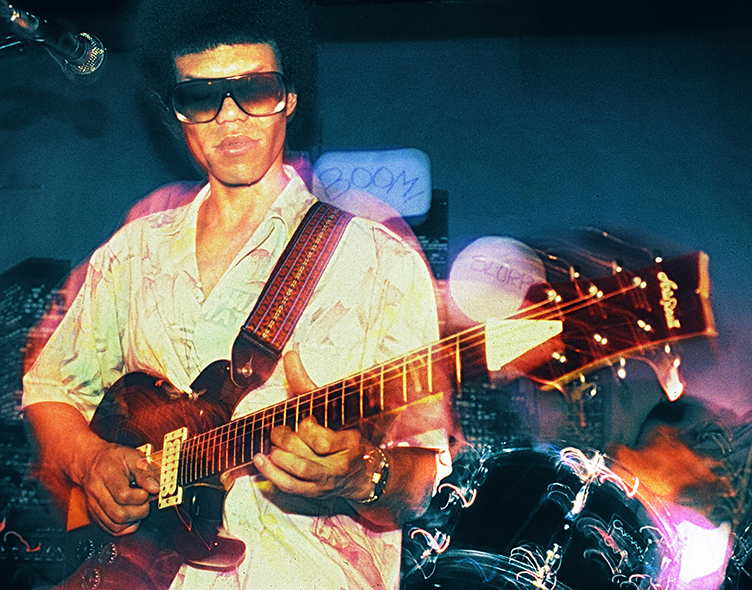
Paulino de Jesus Santos Vieira
Praia Branca, Sao Nicolau, 1956
Multi-instrumentalist, songwriter, singer, producer
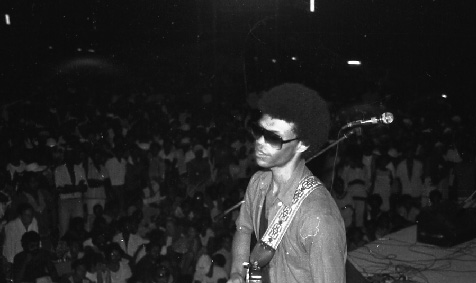
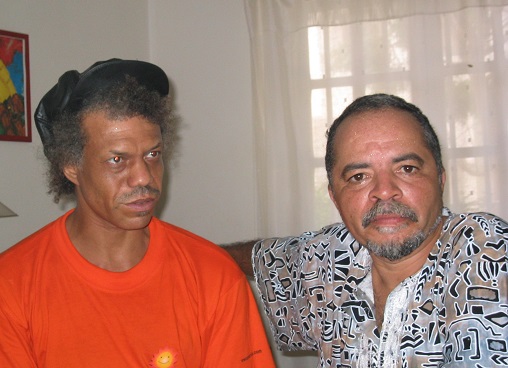
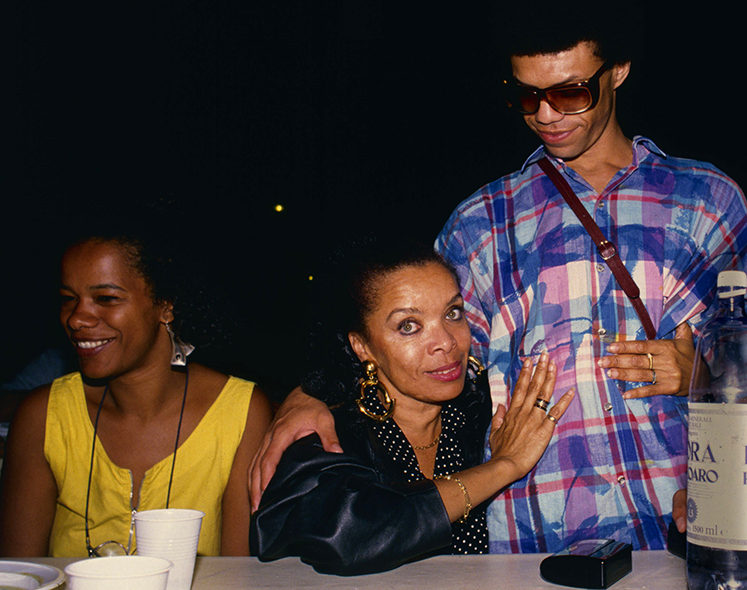
Revered by musicians for his genius and acclaimed by audiences for the striking success of his compositions, Paulino Vieira is an icon of Cabo Verdean music of his time, leaving a profound mark as a songwriter, producer, arranger, and instrumentalist.
Multifaceted in the studio and an entertainer on stage, his career is diverse and his personality is controversial. Around the age of six, in Praia Branca, Sao Nicolau – the town where he was born – he learned his first notes from his father, Santos Vieira, and sometime later built a toy that became his first instrument.
With the abundance of real instruments in the house, the children had access to them. After their father’s death in 1966, Paulino and his brother, Toy Vieira, went to live in Mindelo, where they studied at the Salesian seminary, under the guidance of Father Simões – often mentioned by musicians who were trained during that period.
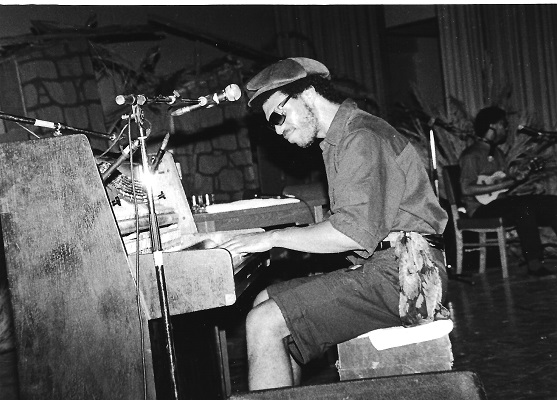
Another teacher Paulino identifies as important in his musical development was a teacher named Rodolfo (Artiletra, October 1996). He initially learned music theory and clarinet and soon moved on to other instruments such as flute and organ, eventually reaching the piano as he revealed in an interview with Voz di Povo, (January 20, 1990).
He took part in school bands, and in 1970 he became one of the founders of Kings, a group he left in 1974 when he moved to Portugal at the invitation of Luis Morais, who, together with Bana, was at that time creating a new version of Voz de Cabo Verde.
In his new formation of Voz de Cabo Verde, Paulino took on the arrangements and keyboards – although over time he would play different instruments, since he mastered them all. At that time, the group included Armando Tito (lead guitar), John (rhythm guitar), Bebeth (bass), and Cabanga (drums). Paulino would remain until the group’s end, in 1982.
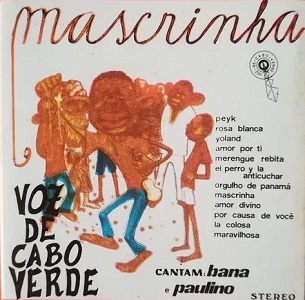
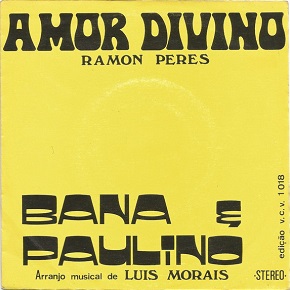
“Encontrarei o amor” (1974) – an electric record featuring a repertoire that ranges from Luis Morais to James Brown, passing through Roberto Carlos and several cumbias – is the first LP by this Lisbon-based Voz de Cabo Verde group, and Paulino appears as singer, songwriter, and performer (the album’s title is taken from one of his own compositions, with lyrics in Portuguese). The same applies to the LP Mascrinha, released the same year, an album in the pop style of the time, where he performs danceable tunes and romantic Latin American and Brazilian songs. Two tracks friom this record would later be compiled into a single titled Bana e Paulino.
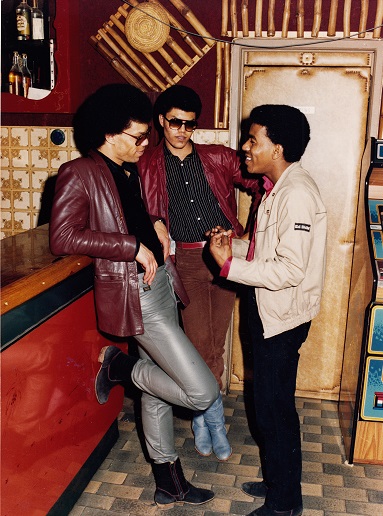
From the late 1970s to the early 1990s, many singers who wanted to record and looking for a producer, arranger, musicians – in short, the entire structure needed for music recording, with which some of them were not familiar – found in Paulino Vieira the support they needed to bring their projects to life.
Among them there were several Cabo Verdean artists based in the United States and other Cabo Verdean diaspora communities, who traveled to Lisbon specifically for that purpose. From the credits on the covers of at least fifty records, during this period there existed in Lisbon, a core group of Cabo Verdean musicians in which Paulino occupied a central position. Around him gathered musicians such as Bebeth, Cabanga, Armando Tito, and Leonel in the early years, with names like Zé António, Tito Paris, Toy Vieira, and Toy Paris appearing somewhat later. Several albums by Bana and Luis Morais also featured this core group as the instrumental base, with Paulino as arranger, with or without the name Voz de Cabo Verde.
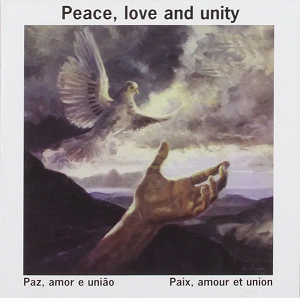
Other examples of albums from this period made under his coordination include the first two LPs by Tete Alhinho and Nka por si by Zeca and Zeze di Nha Reinalda. Also worth mentioning is the LP Peace, Love and Unity, in which, as producer, Paulino Vieira brought together dozen of voices from the Cabo Verdean community in the United States, as well as renowned artists such as Ildo Lobo, Zeca de Nha Reinalda, and many others. Recorded partially in the U.S. and partly in Portugal, the LP was released in 1990 by the association Help CV.
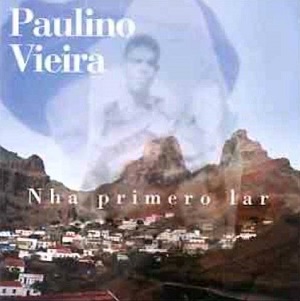
Paulino himself lost count of how many albums he produced, arranged, and recorded, as he revealed at the time of the release of his album Nha primeiro lar. Often, he did so purely out of solidarity, even though he had made music his profession from a very young age. “I recognize that I’ve always lived with financial difficulties because I worked almost always with people who could not afford to pay. And I can’t take money from someone who has no means to pay – but at the same time, I can’t refuse to help them for that reason.” (Novo Jornal Cabo Verde, 17.07.1996).
This detachment and a deep sense of universal brotherhood are expressed by the musician in several statements, such as: “I only want to be a good person before humanity. I only use music as a way to reach people. Music is like my work hoe. I want to be a Cabo Verdean who can speak both to Cabo Verdeans and to the whole world, someone who can convey a message of peace and unity,” (Interview with Vuca Pinheiro, Farol, June 1990).
I only want to be a good person before humanity. I only use music as a way to reach people. Music is like my work hoe.
Paulino Vieira, in an interview with Vuca Pinheiro, Farol, June 1990
From the early 1990s onward, one can observe the end of this period of abundant collaboration by the musician in recordings made in Lisbon, as Paulino began to work with Cesária Évora. After taking part (on piano and harmonica) in Mar azul, among other guest musicians, he would be presented on Miss Perfumado, the album that brought Cesaria international fame. Recorded in June 1992, it featured almost exclusively the two Vieira brothers, alternating on the various string instruments and piano, with Paulino also handling musical production. Occasional contributions included Malaquias Costa (violin on some tracks) and Escabech (reco-reco). The tour following the release of the album lasted about two years. The band included, besides the two brothers, Armando Tito and Vaiss, as well as other musicians at certain concerts, such as Luís Morais and Bau, who played on the Live at the Olympia CD recorded in Paris in 1993. The album Cesária (1995), also under Paulino’s direction, kept the touring group as its core, with additional guest musicians.
During concerts, Paulino not only played but also acted as a kind “link” between Cesária, whose temperament was never particularly expressive, and the audience, “to help her open up and show who she really was” (Novo Jornal Cabo Verde, 06.11.1993). “It’s a matter of guiding Cesária’s state of mind and making the most of it,” the artist said at the time. And while Cize took a breaks to rest, smoke, and sip her drink (back then, there was still a bottle of cognac on the table on stage), Paulino would solo on the piano, joke around, and entertain the audience – a role that, after his departure, was taken on by Totinho.
It was possibly this dynamic that lay at the root of the conflicts which, beginning in 1996, arose between Paulino Vieira and Djô da Silva, eventually leading Paulino to withdraw from Cesaria’s career. According to Silva, Paulino was taking on “excessive prominence” (Público, 12.02.1997). In an interview with RDP Africa (29.06.1997), Paulino said: “When they invited me, it was to brighten things up and get Cesária going on again – she hadn’t been performing for four or five years (…) When success came, they wanted us to tone down, to reverse things, to impose rules (…) I can’t collaborate with what doesn’t align with my sensibility.”
Around the same time, Paulino Vieira brought to light the “Sodade” case (the hit song made famous by Cesária on Miss Perfumado), questioning its authorship and claiming it was written by Armando Zeferino, a shopkeeper from the village of Praia Branca (Público, 08.01.1997; A Semana, 10.05.2002). The case went to court. In the meantime, Paulino, who had often spoken out in the Cabo Verdean press against Lusafrica and producer Djô da Silva, ended up turning against Zeferino himself, the very man he had originally sought to defend with his denunciation (A Semana, 20.08.2010 and 10.09.2010).
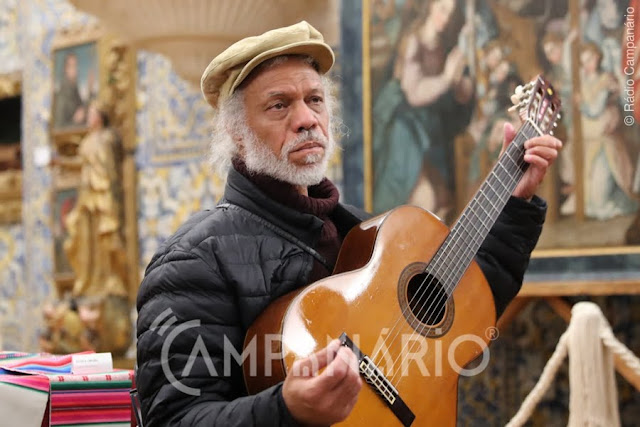
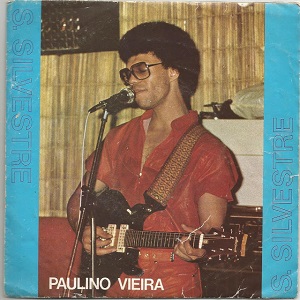
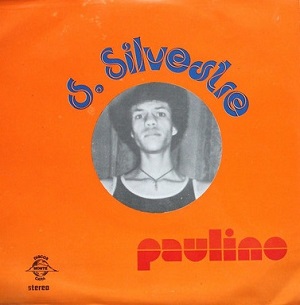
As for his solo records, Paulino Vieira made his debut with a single recorded in 1978, São Silvestre, on which he played all the instruments, prompting a comment in Voz di Povo (21.03.1979), as it was probably the first time this had been done by a Cabo Verdean artist. His subsequent albums were also recorded entirely by Paulino, who only occasionally collaborated with other musicians .
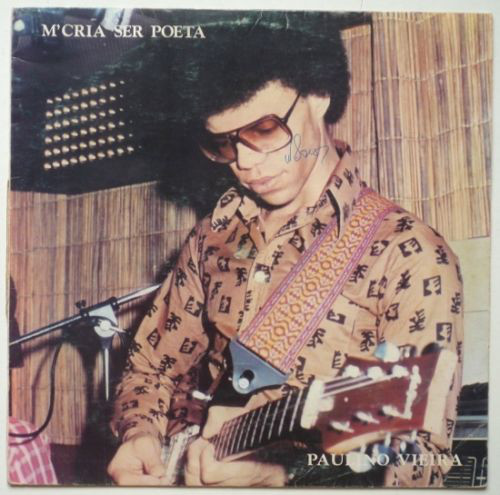
In 1984, came M’cria ser poeta, an LP whose songs – such as “M’cria ser poeta” and “Prêce di um fidjo (Alo Cabo Verde)” – would be repeatedly covered by different singers over the years, becoming true classics. In 1996, he released Nha Primeiro Lar, a project dedicated to his father, on which he had worked for several years. That same year, Lusafrica released the single Boas Festas, but its distribution displeased the musician – likely further intensifying his disagreements with the label (Público, 08.01.1997).
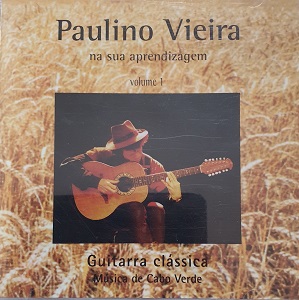
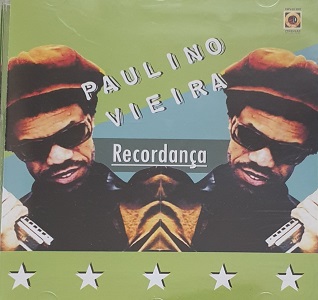
From 2003 onwards, maintaining a consistently critical attitude toward record labels, Paulino Vieira began to release his albums independently and distribute them through alternative means. The first in this series, Paulino Vieira na sua Aprendizagem Vol. I – Guitarra clássica, was his first fully instrumental album, as would be the ones that followed, featuring a sequence of 25 pieces performed on a 12-string guitar. Paulino announced other volumes in what appears to be a series covering different instruments. This was followed by a single in homage to Mestre Baptista, an instrument maker, and Recordança, both in 2007, and three years later, Paulino Vieira.
Discography
- Bana e Paulino, single, Voz de Cabo Verde, Lisbon, 1975. Compilation of songs from the LP Mascrinha by Voz de Cabo Verde II.
- Bana e Paulino Vieira, LP, Voz de Cabo Verde, Lisbon, 1975.
- São Silvestre, EP, Discos Montecara, Lisbon, 1978.
- M’cria ser poeta, LP, Montecara, Lisbon, 1984. CD editions by Sons d’África, 1996.
- Nha primeiro lar, CD, Lusafrica, Paris, 1996.
- Boas festas, CD single, Lusafrica, Paris, 1996.
- Paulino Vieira na sua aprendizagem vol. I – Guitarra clássica, CD, author’s edition, Lisbon, 2003.
- Então, mestre, CD single, author’s edition, Lisbon, 2007.
- Recordança, CD, author’s edition, Lisbon, 2007.
- Paulino Vieira, CD, author’s edition, Lisbon, 2010.
- Participação no LP Reencontro, 1982. With Bebeth, Zé António, Luís Morais, Leonel, Morgadinho, Djosinha, Bana and Chico Serra.
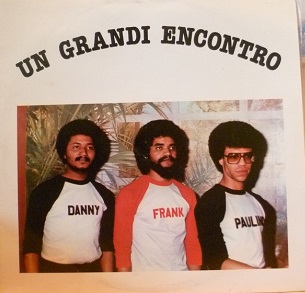
- Participation in the album Un grandi encontro, 1984. With Frank de Pina and Dany Carvalho.
- Participation in the album Cabo Verde poema tropical, 1985, by Quirino do Canto.
- Participation as producer and musician in the LP Peace, Love and Unity, 1990.
- Participation in the album Trás di Son, 2006, by Djinho Barbosa on the songs “Dexam cai” e “Bu Enkantu”.
Songs
Anjo Luminoso; Arca Azul; Cinderela; Criolo é Sabe; Desuspero; Dia Já Manxê; Encontrarei o amor; Felicidade Já Tchgâ na Mim; Goenta Canela; Grande Fôque; Love, Peace and Unity; M´Cria Ser Poeta; Maria Ô; Melodia d´Esperança; Natal (Meu Irmãozinho Bebé); Naufrágio; Nha Primeiro Lar; Nostalgia; Odie Ê Pobreza; Olim tâ Bai Cheio di Sodade; Pâ independência; Panha Calode; Percussão; Praga de Burro; Prêce di um Fidjo (Alo Cabo Verde, Hello CV); Puntim+Puntim; Quant na Um; Seus Pais Não São os Meus; Sol di Manhã; Solidão; Sou atrevido; Tchadinha; Trabaia pa nos Terra; Um Minute d´Silence; Um Sonho Cordode.