Toy Vieira
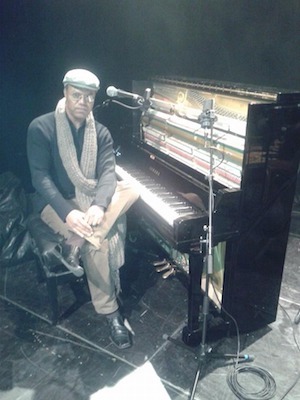
António de Jesus Santos Vieira
Praia Branca, São Nicolau, 1962
Composer, multi-instrumentalist
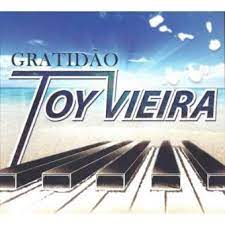
After 30 years of performing as a stage and studio musician, Toy Vieira released his first solo album, Gratidão (Gratitude), in 2013. The instrumental album features piano and acoustic guitar solos.
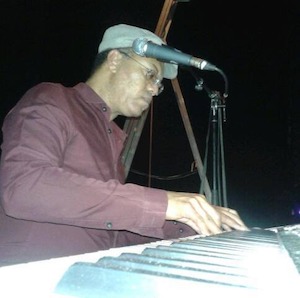
At the age of 20, he began his professional career when he and Tito Paris were invited in 1982, while in São Vicente, to join the group Voz de Cabo Verde in Lisbon. They joined during the group’s final years but still participated in a large number of recordings. Most Cabo Verdean albums from that period were recorded under the musical direction of his brother, Paulino Vieira, who served as arranger. Having just arrived in Lisbon, Toy was immediately immersed in nonstop work.
Recalling that period, he describes it as: “A strict life, difficult in every way. Tito and I had just arrived, with no experience. In Portugal we faced a professional life with two responsibilities: to learn what we didn’t know and improve what we did know. And to work all the time. We would play all night during rehearsals, go to the studio at nine in the morning, leave at seven in the evening, go home to shower and eat dinner, and then go out to perform again…” (Cabo Verde & a Música – Dicionário de Personagens).
Toy Vieira cannot even estimate how many albums he has played on since then. He mentions recordings by Mirri Lobo, Fernando Quejas, Ana Firmino, Bana, Lura, and many others.
One album in particular became historic: Miss Perfumado by Cesária Évora. The album was recorded by the two Vieira brothers, with violin later added by Malaquias Costa on the song “Angola” and reco-reco percussion by Escabech. Toy also joined the international tour for Miss Perfumado and performed on Évora’s next album, Cesária, released in 1995.
His first experience as a producer and arranger came in 1983 with São Silvestre, an EP by Manuel d’ Novas. Manuel had traveled to Portugal intending to record with Paulino Vieira, but Paulino was unavailable. According to Toy, Manuel d’ Novas practically “forced” him to take on the project. “It was a huge responsibility. I didn’t feel ready at the time.”
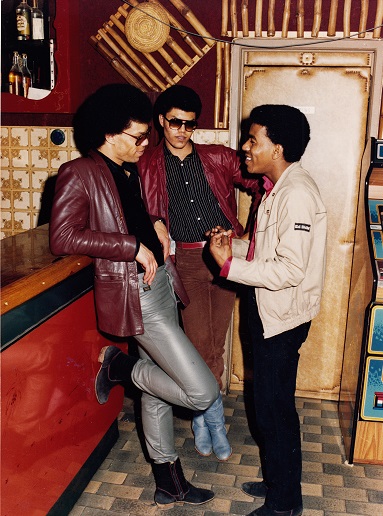
Apart from recording sessions, Toy regularly performed in Cabo Verdean nightclubs in Lisbon, including O Baile and B. Léza. He usually played keyboards, although guitar has always been his favorite instrument.
He says he does not particularly enjoy producing or arranging: “What I really like is playing—whether in clubs or in the studio, on guitar, piano, cavaquinho…”
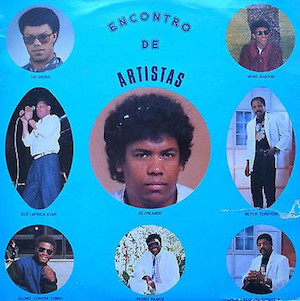
On occasion he also sang. He appeared on the 1990s LP Encontro de Artistas, produced by Zé Orlando, and on the collaborative album Katchupa Rica, produced in the United States by Dany Carvalho.
Toy’s musical education began at home with his brothers. When his father, Santos Vieira, died, Toy was only four years old.
He recalls: “Being the youngest, you naturally tend to follow what your older brothers do. That’s how I started playing. First the guitar, then the cavaquinho. Because I was so small, they didn’t want me touching the guitar—they were afraid I’d damage it. So I made my own guitar with three strings, which was all I could find. I learned to make chords on those three strings.” (Cabo Verde & Its Music – Dictionary of Personalities). While his brothers taught him guitar chords, he taught himself keyboard using a melodica.
Around the age of 12, he joined a group associated with the Abel Djassi Pioneers, performing at cultural events and political rallies during the early years following Cape Verde’s independence. Before that, when he was 14, he formed his first band, Jovens Negros (Young Blacks). Of all its members, Toy was the only one who eventually became a professional musician. He later played with the band Wings, and it was from that group that he left for Portugal in 1982.
Beginning in the early 1990s, his compositions started to be recorded by other artists. Initially, singer Vaiss included three of Toy’s songs on his debut album. Later, Djosinha recorded “Coraj’ermun,” a composition that would go on to receive several new recordings.
Toy also wrote the title track of Tito Paris’s first solo album, Dança ma mi Criola (1994). The song has likewise been recorded by other artists, including Brazilian singer Martinho da Vila, who included it on his 2000 album featuring songs from the Portuguese-speaking world.
Eclectic in both the Cabo Verdean musical styles he explores and the moods he conveys—ranging from intimate and reflective to lively and danceable—Toy Vieira’s repertoire is characterized by its remarkable variety.
In 2014, he was named Best Music Producer at the Cabo Verde Music Awards (CVMA) for producing his own album, Gratidão, released the previous year.
Discography
- Gratidão, CD, Harmonia, Praia, 2013.
- Encontro de Artistas (Various Artists), LP, 1990; performs his composition “Sodade ca bô frontam.”
- Katchupa Rica (Various Artists), CD, 1997; performs “Judeu.”
Songs
Amdjer cretcheu (parceria com Luís Lima); Ansiedade; Bida Mariadu (parceria com Lura); Brother; Calor di Bo Amor; Cantos de amor/Canto d’amores (parceria com Luís Lima); Contradição; Coraj’ermun; Criola; Dança Ma Mi Criola; D’zemcontre (parceria com Luís Lima); Estrada lundum; Falso Testemunho; Festa di Nha Kumpadri; Lamento Baixinho; Marina; Montecara (parceria com Luís Lima); No Intende; P´ta Dia Pâ Trás; Perdão nos ausência; Romaria; Rosto di Morena; Simplicidade d’ S.Nicolau; Sodade Cá Bo Frontam; Sonha Na Bo; Sperança; Susti Canela (parceria com Sap); Telma coladeira; Traça Nha Rume; Um dia; Violão em Diálogo; Viva Vida.